Officially launched in September, the First-Time Home Buyer Incentive was created to help qualified first-time home buyers reduce their monthly mortgage payments. Overall, the First-Time Home Buyer Incentive was created to make owning a home for the first-time a reality.
So, how does the First-Time Home Buyer Incentive actually work?
The incentive is not interest-bearing and does not require ongoing payments. The incentive helps to create a more affordable monthly mortgage payment for the first-time home buyer. The Government of Canada will offer incentives for:
5% of a first-time buyer’s purchase of a re-sale home
5% or 10% for a first-time buyer’s purchase of a new construction
It is important to remember that the first-time home buyer will need to repay the incentive. The first-time home buyer can repay the incentive in full at any time or if the property is sold after 25 years — whichever happens first. The repayment of the incentive is based on the property’s current fair market value, multiplied by the incentive percentage amount:
If they received a 5% incentive and the value of the home increased to $300,000, the payback would be $15,000
If they received a 10% incentive and the value of the home decreased to $150,000, the payback would be $15,000
How to know if your client can actually qualify for the First-Time Home Buyer Incentive?
Are they a Canadian citizen, permanent resident or a non-permanent resident who is legally authorized to work in Canada?
Do they have a maximum qualifying household income of $120,000 per year?
Is at least one borrower is a first-time home buyer?
Additionally, a first-time home buyer can come in many different forms:
Has never purchased a home before
Experiencing a breakdown of a marriage or common-law partnership
In the last four years, did not occupy a home with a current spouse or common-law partner that either owned.
Please click the button below for more information on the First-Time Home Buyer Incentive:
Wondering how you can be more effective in advancing the development of affordable or assisted rental housing in Halton Region? Looking for some “tools” and resources? Just looking to network and learn more?
They will have short presentations from experts in the field on the following:
Construction and takeout financing for Non-profits – Housing Investment Corporation (HIC), Joshua Broadhead, Chief Underwriter and Housing Services Corporation staff
National Housing Strategy funding/financing programs (Seed, CoInvestment, Rental Construction financing) with Canada Mortgage and Housing Corporation (CMHC), Anthony Adrien
Ontario Non-profit Housing Association’s “Ready Set (re)Build” 2-day course that we are looking to host on December 12-13, 2019 with Fred Beaver, Education and Research Advisor (ONPHA)
Understanding the impact on municipal and regional planning policies and zoning for your development site with Joe Nethery, Manager – Community Planning, Halton Region
Rent supplement and tenant funding/placement opportunities, Andrew Balahura, Director Housing Services Social & Community Services, Halton Region
Upcoming opportunities for 2020, Sarah Phillips, Senior Policy Analyst, Halton Region
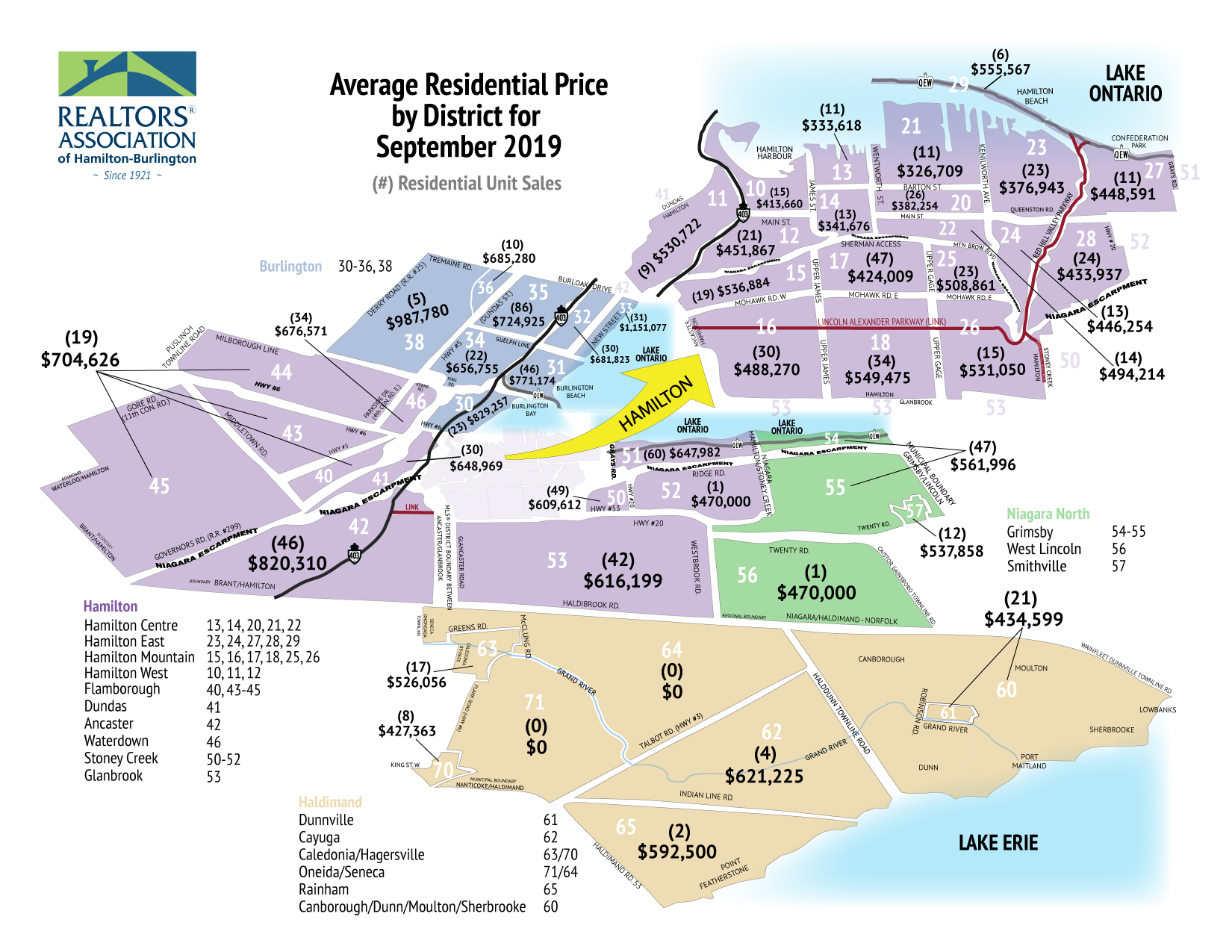
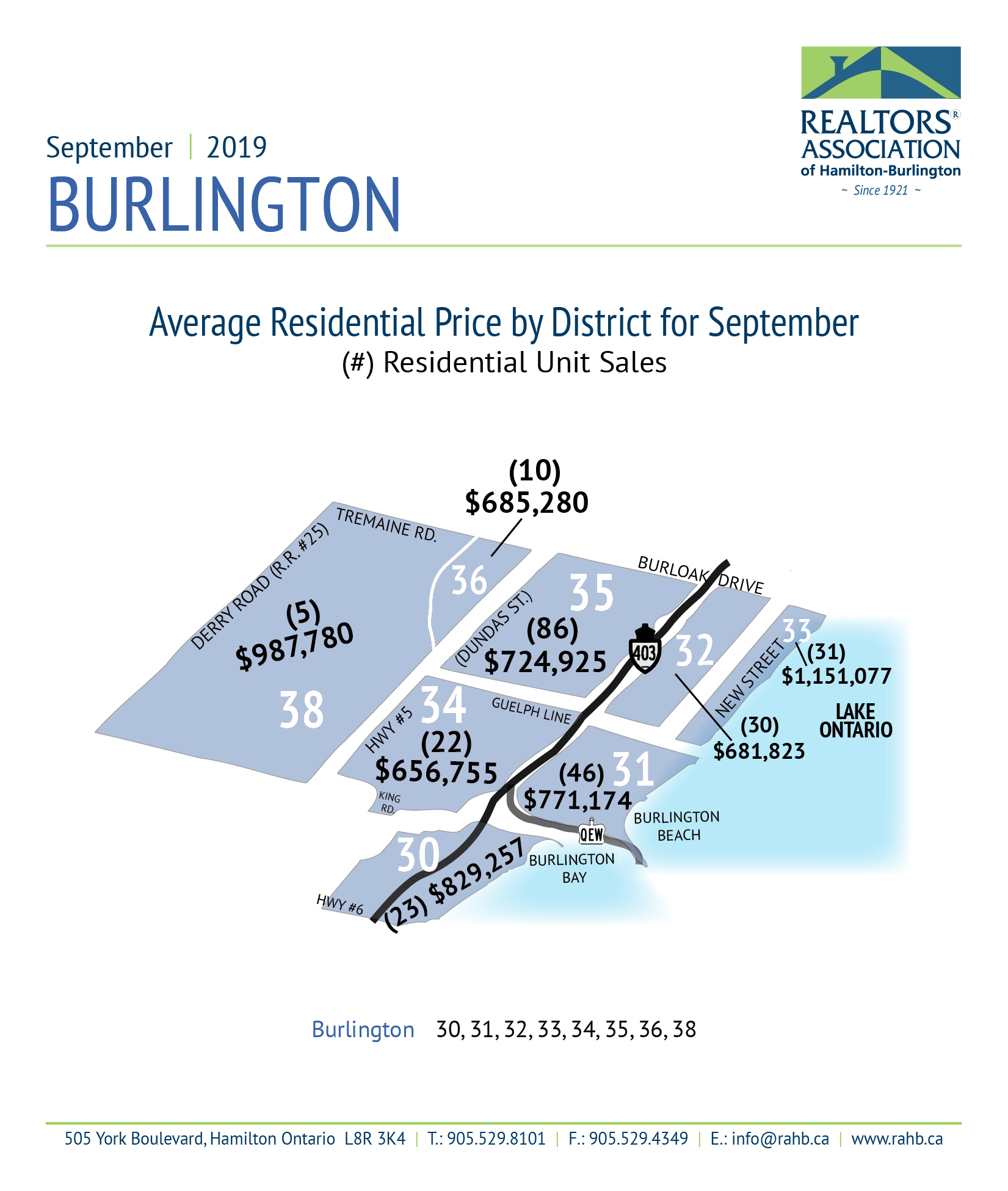
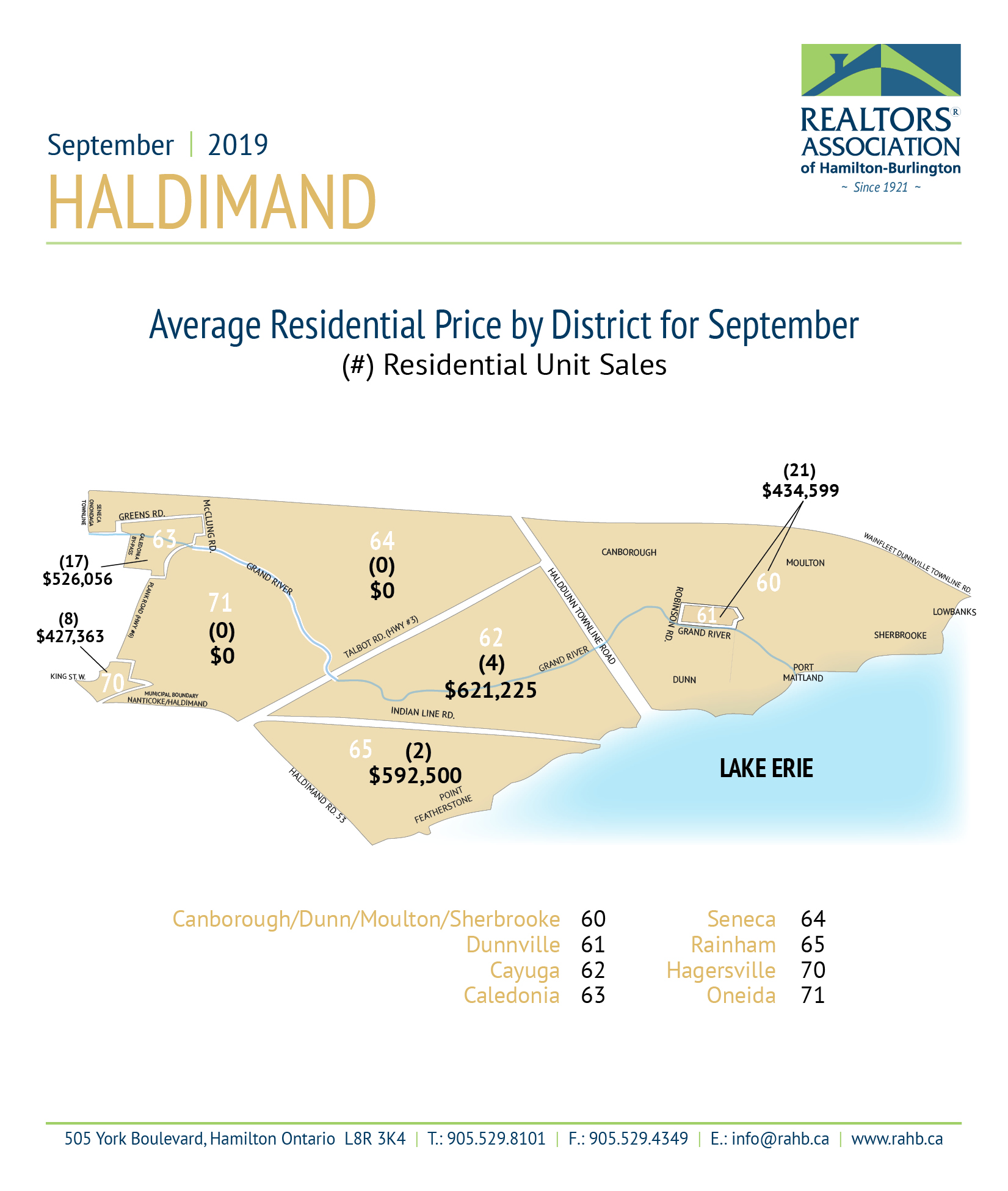
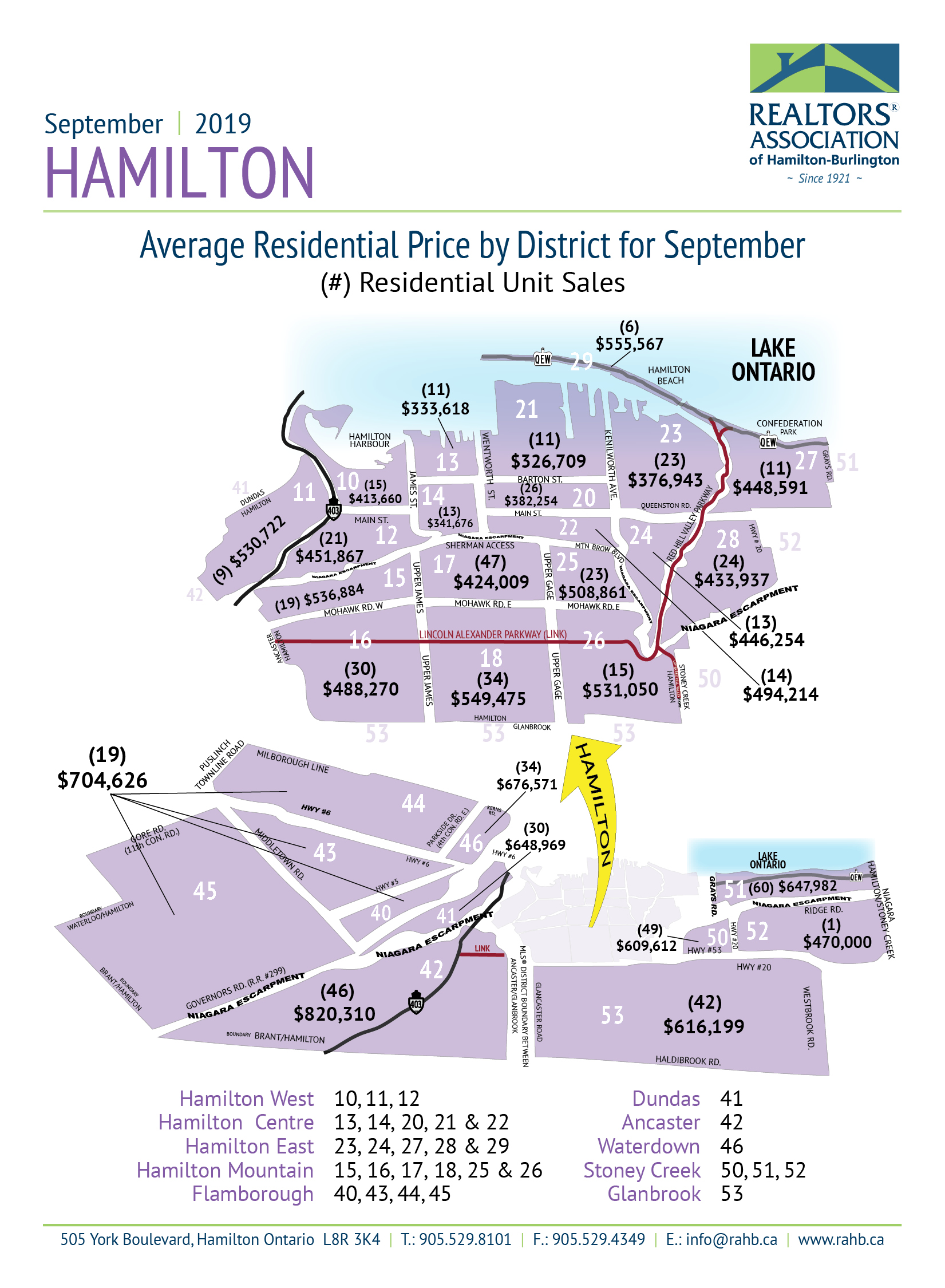
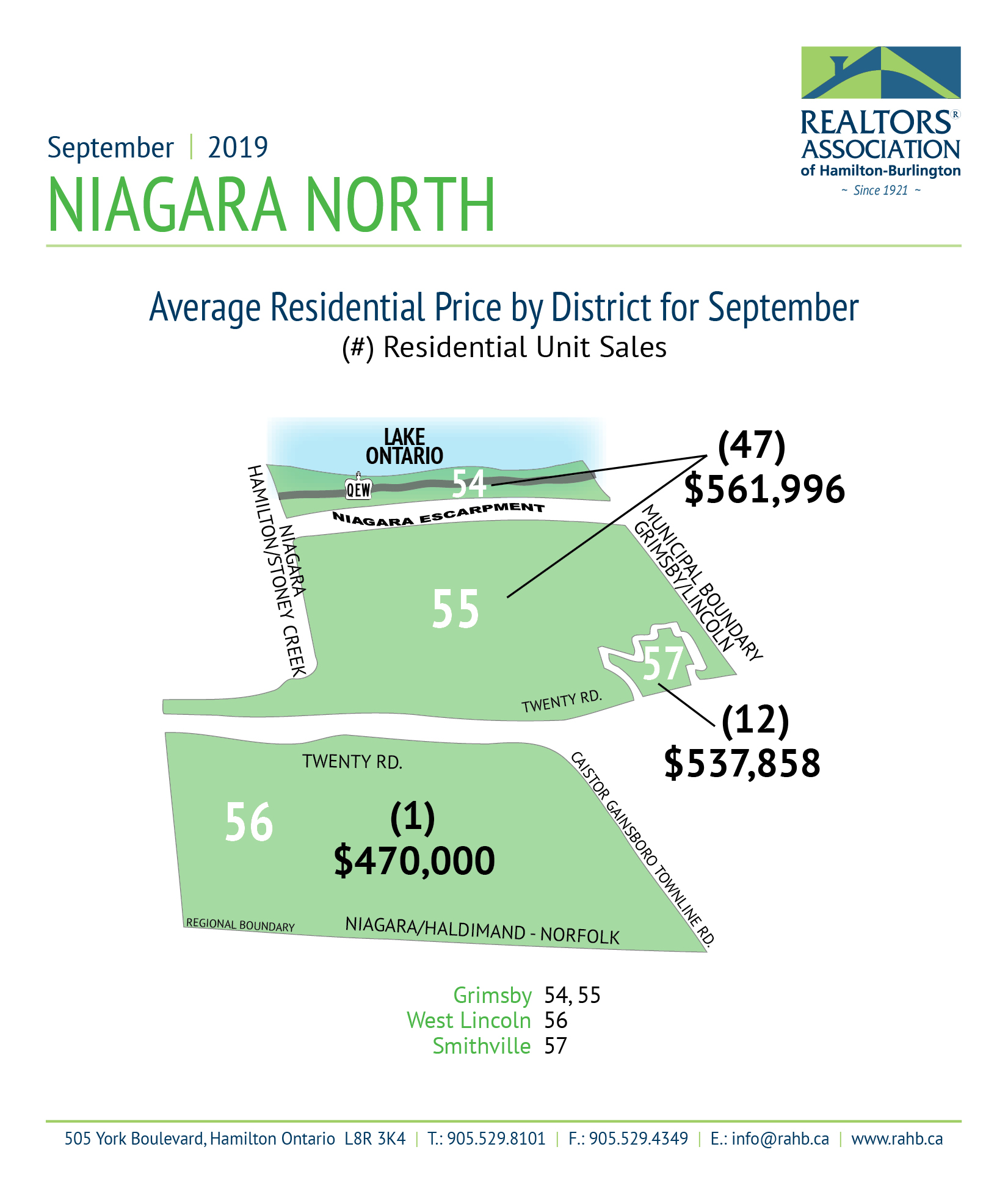
The REALTORS® Association of Hamilton-Burlington (RAHB) reported 1,020 sales of residential properties located within the RAHB market area were processed through the Multiple Listing Service® (MLS®) System in September 2019. September sales are down from August and July, but are up over September 2018 by 3.2 per cent. The average price for residential properties increased by 8.5 per cent from September 2018 to $609,562.
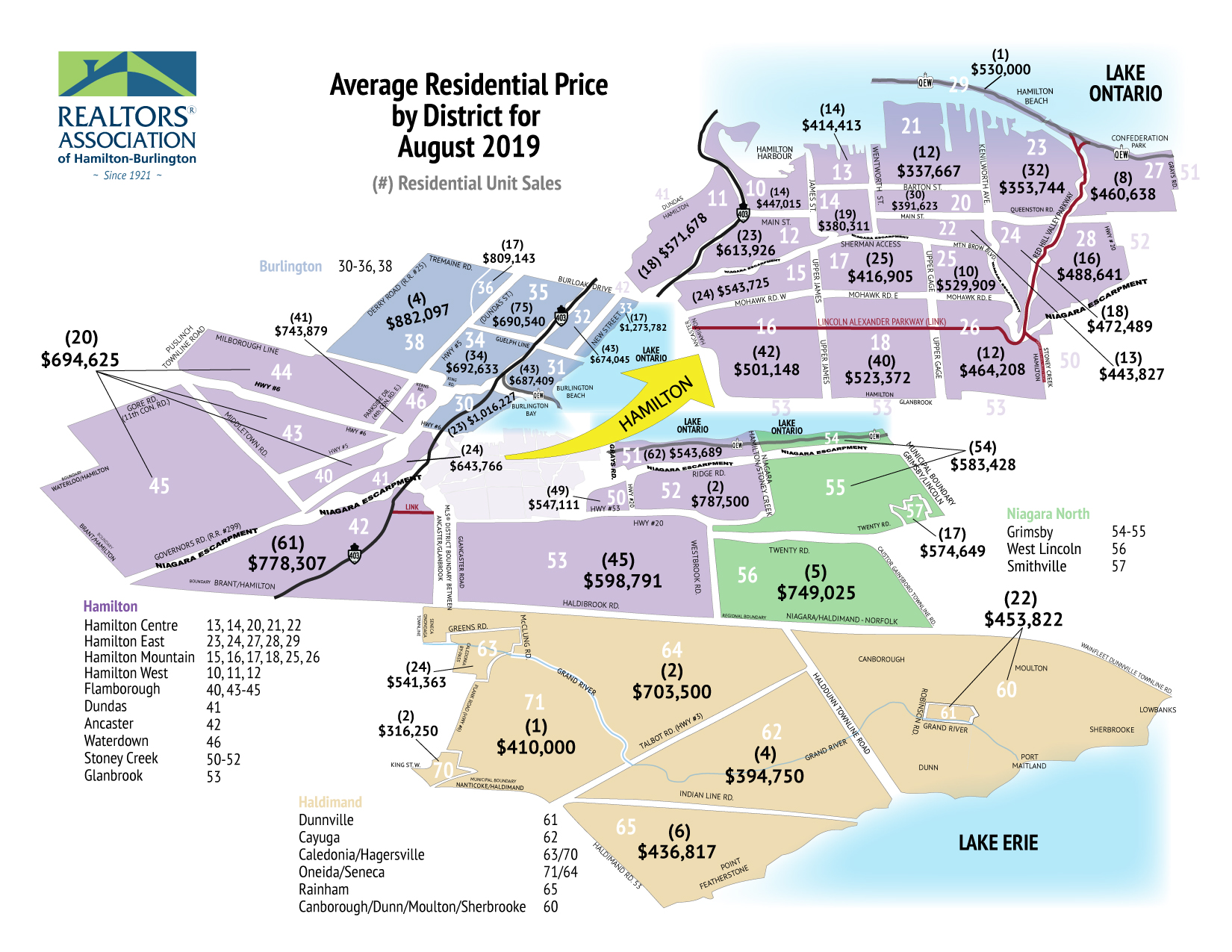
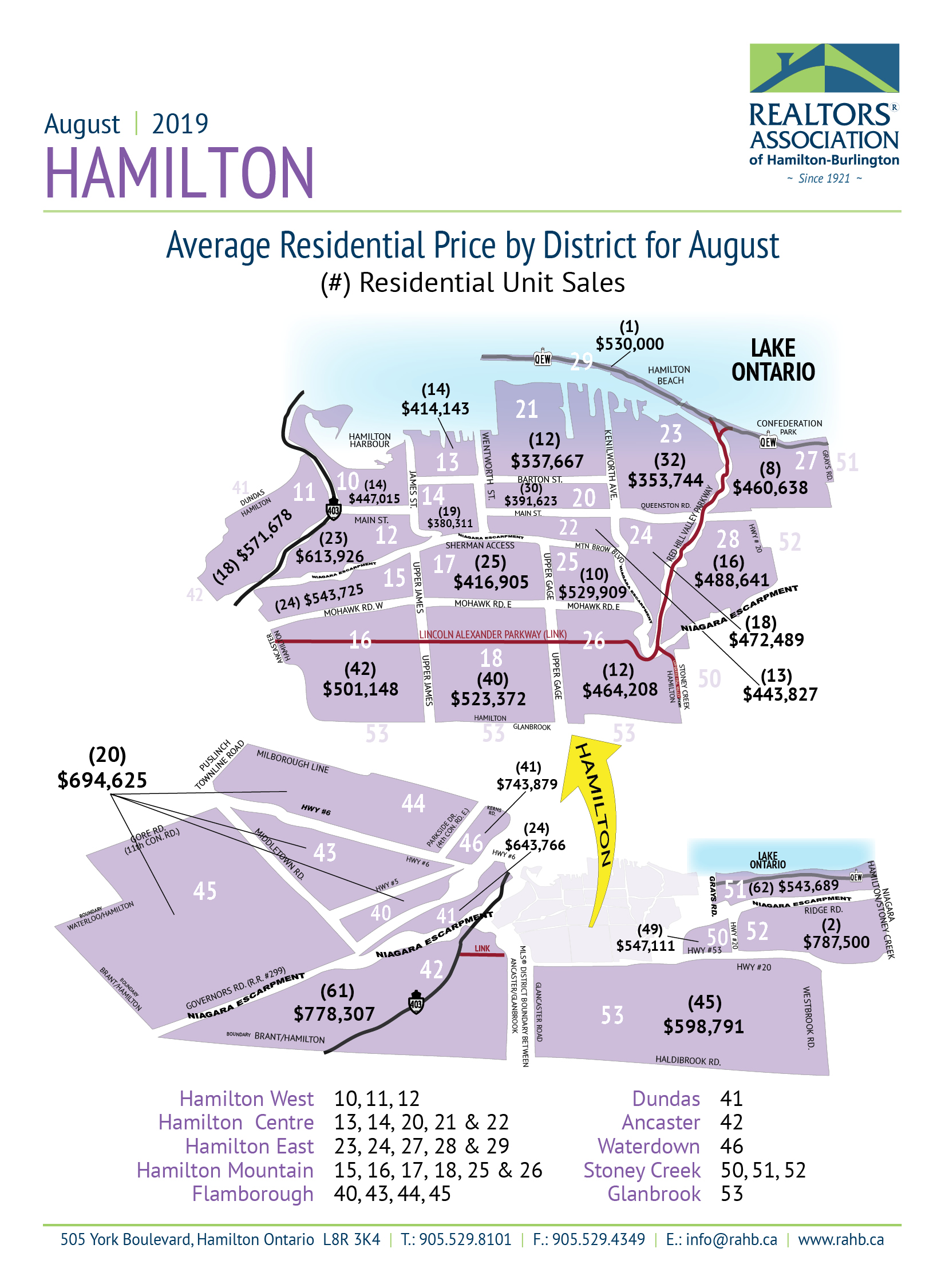
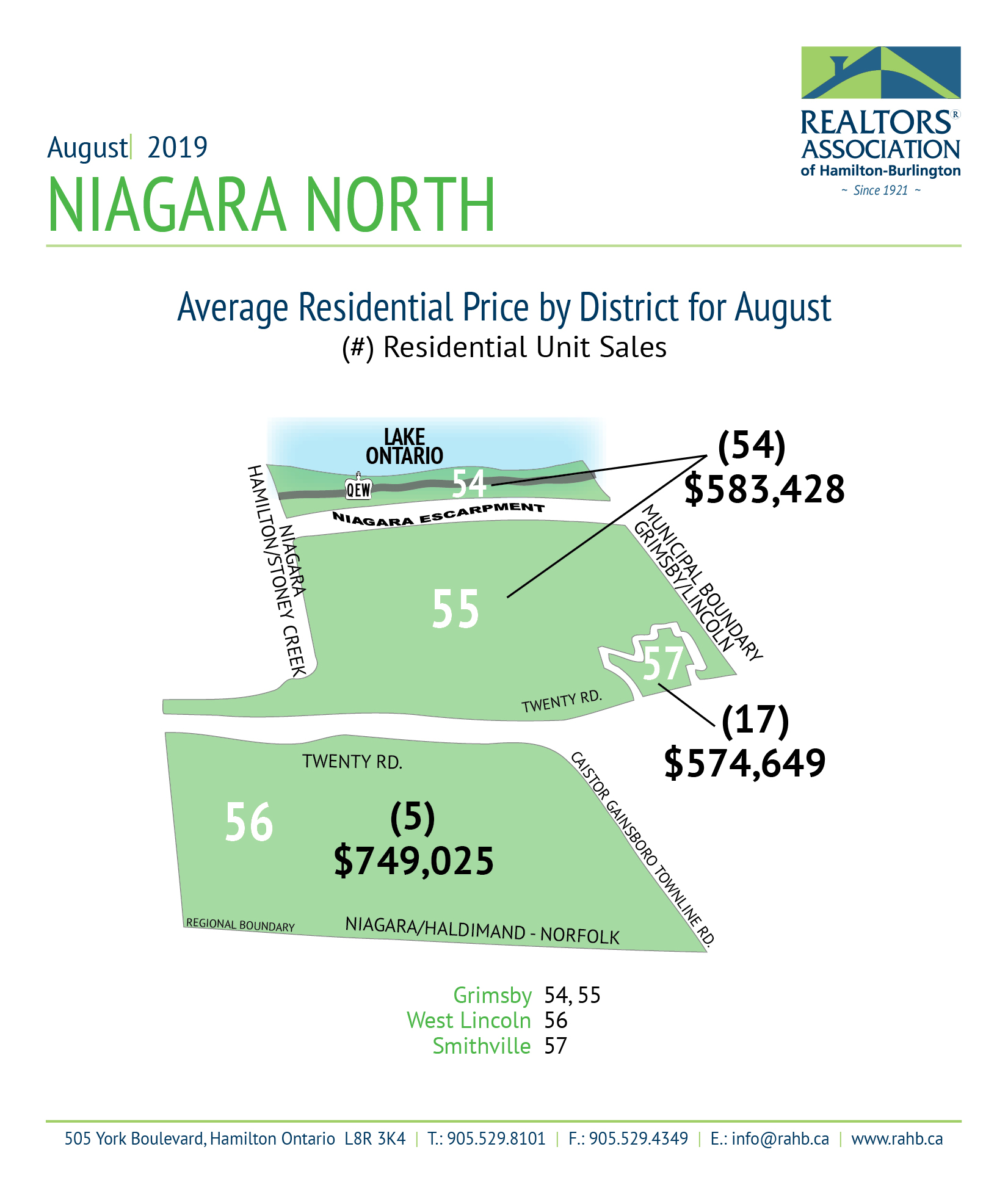
Hamilton, ON (September 3, 2019) – The REALTORS® Association of Hamilton-Burlington (RAHB) reported 1,067 sales of residential properties located within the RAHB market area were processed through the Multiple Listing Service® (MLS®) System in August 2019. August sales are down from July and June of this year, as well as August of 2018; however, the 2019 year-to-date number of sales is up 10.2 per cent over 2018. The average price for residential properties increased by 6.4 per cent from August 2018 to $599,589.
We would like to take this opportunity to remind you that when meeting with clients/potential clients to always stay vigilant about meeting locations and times. If you feel a situation is uncommon or strange, please listen to your instincts and reschedule to a more public location or your office.
Ensure you notify the proper authorities and RAHB, if needed. Watch NewsReal for upcoming courses that RAHB offers on REALTOR® safety and self-protection.
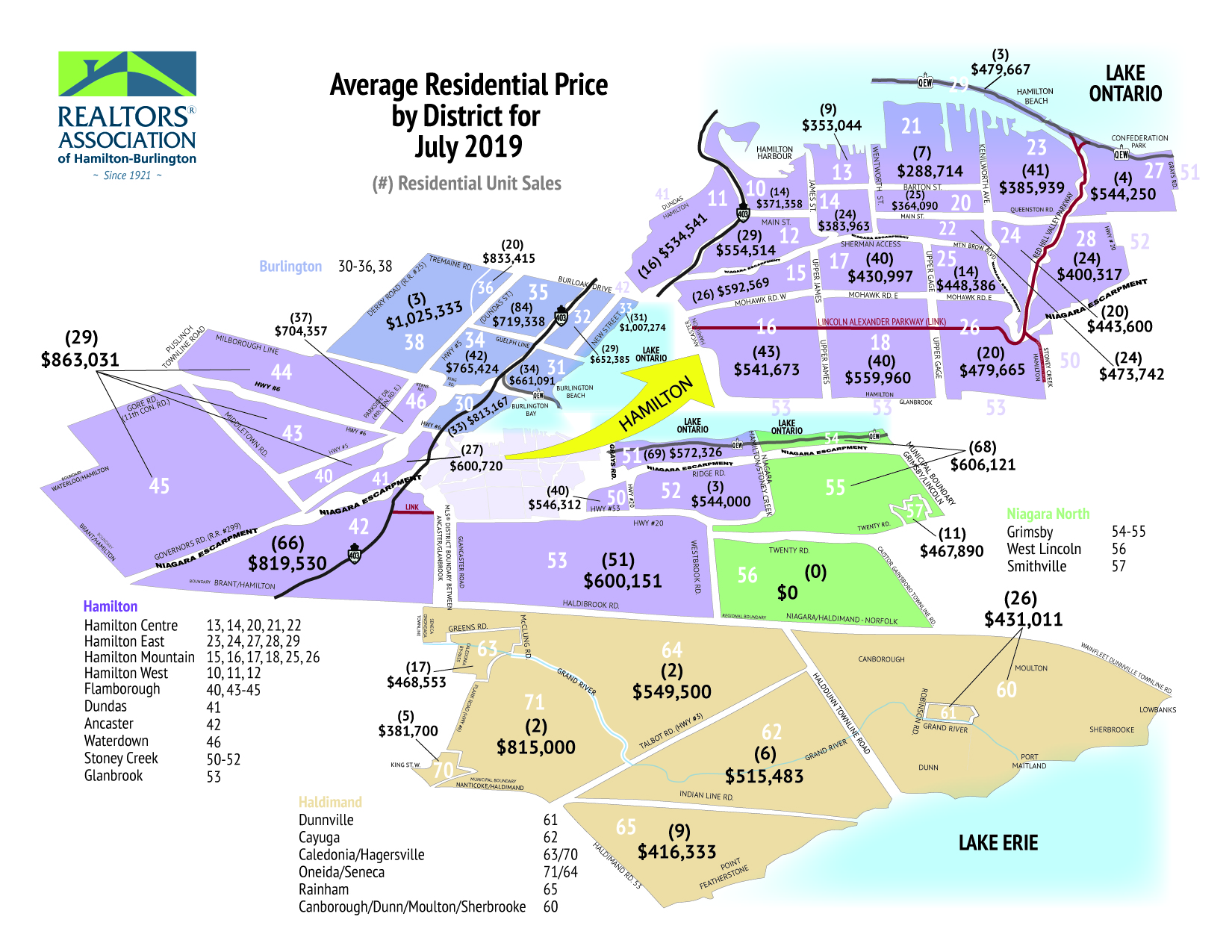
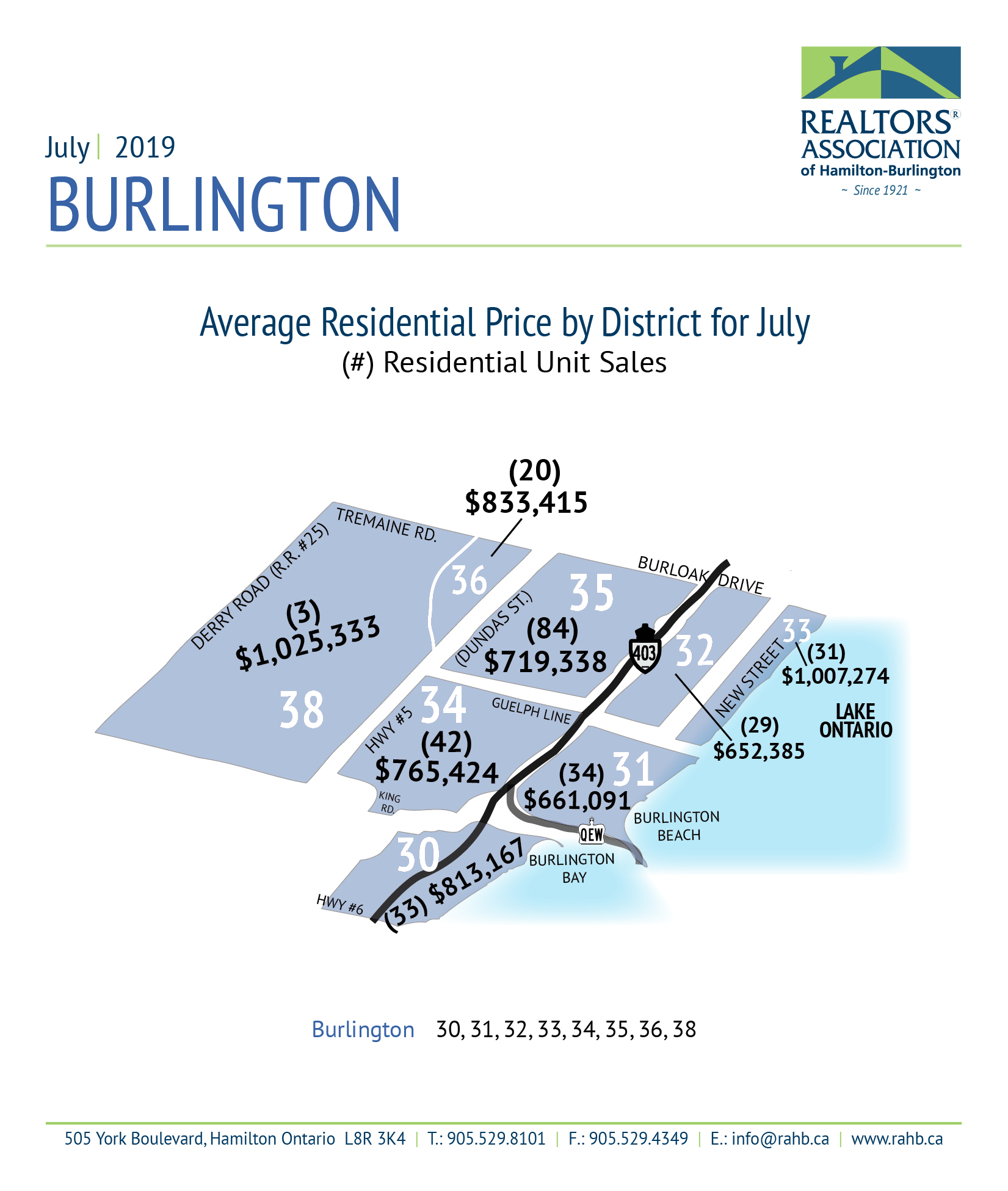
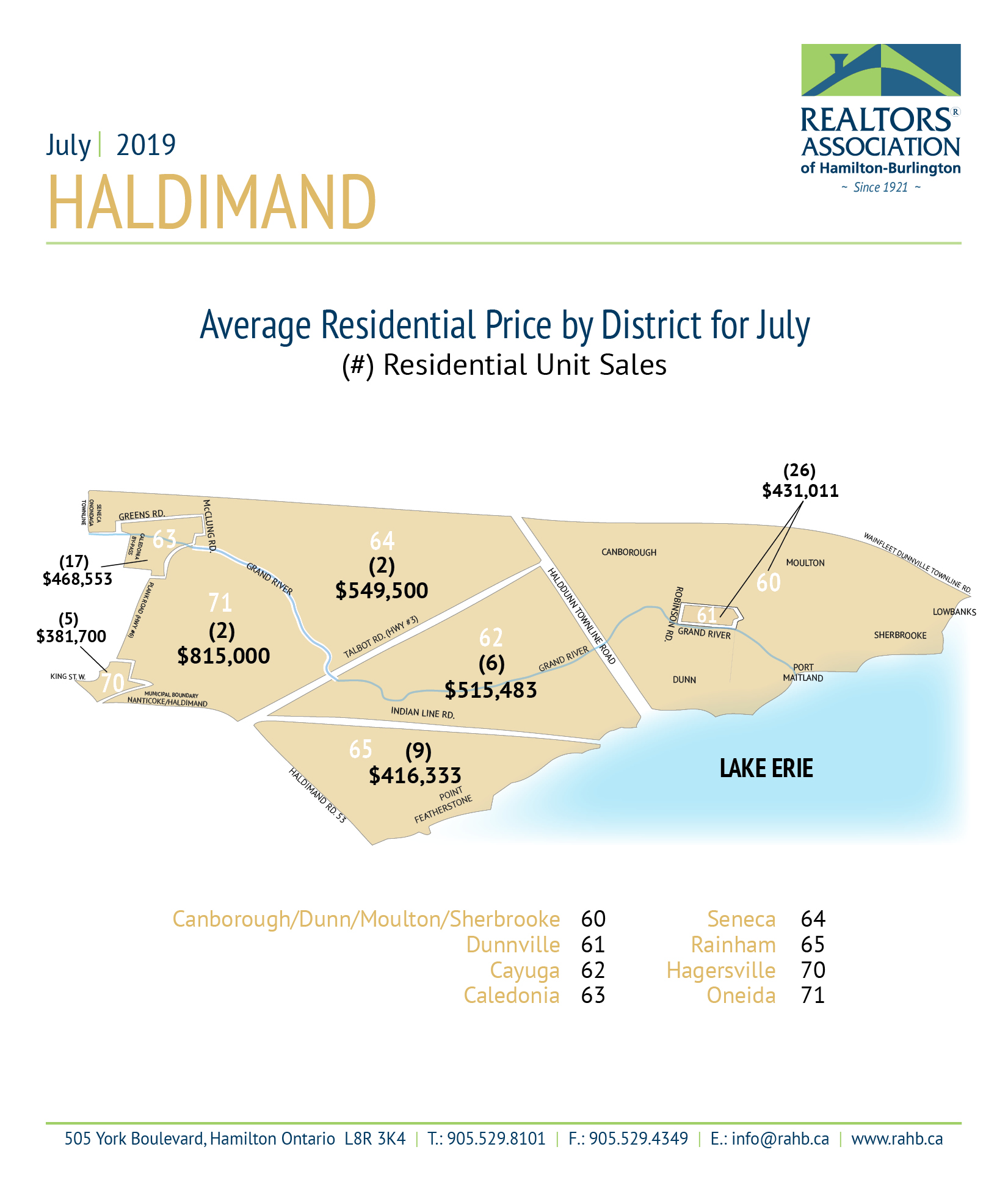
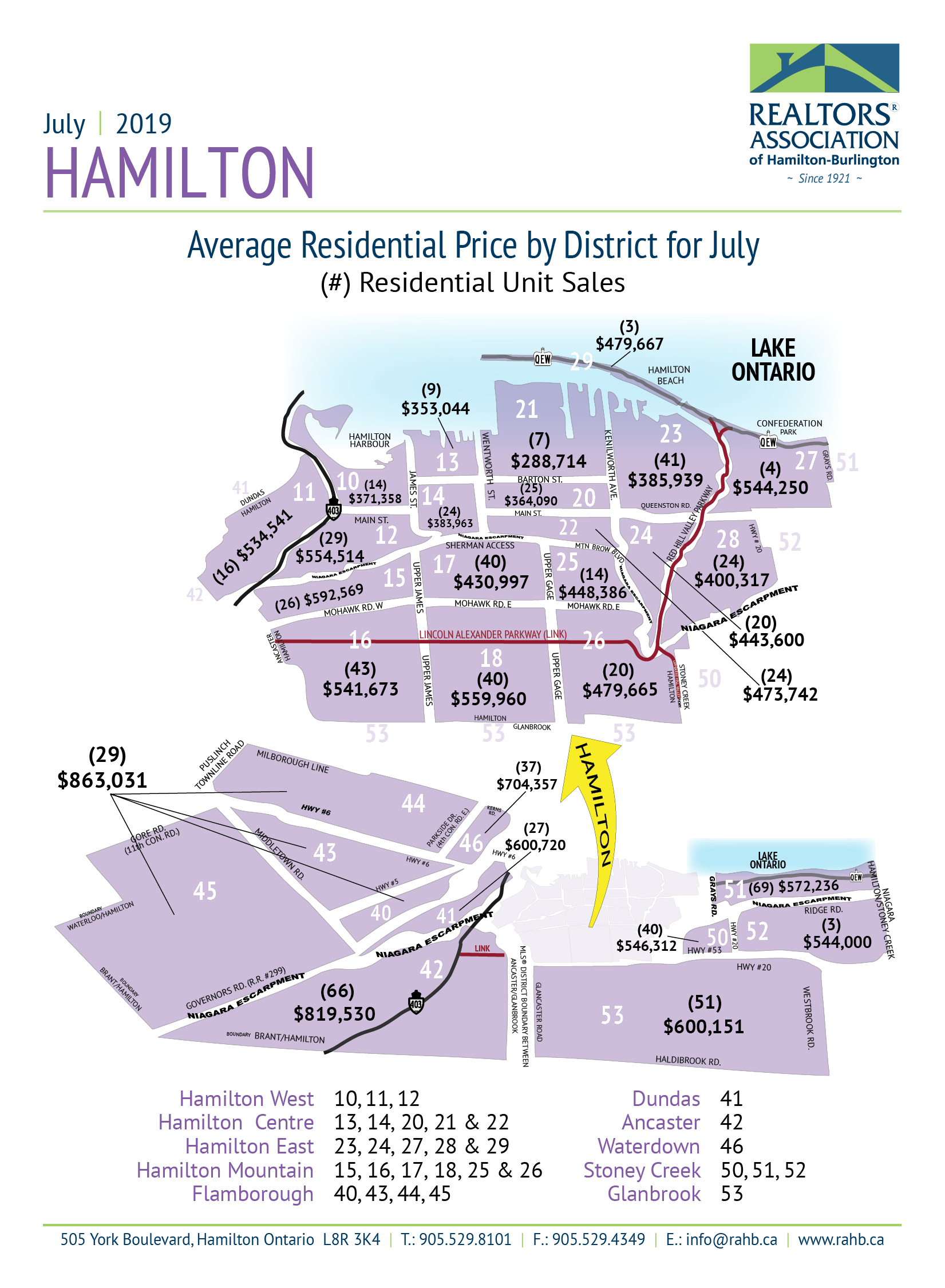
Hamilton, ON (August 1, 2019) – The REALTORS® Association of Hamilton-Burlington (RAHB) reported 1,170 sales of residential properties located within the RAHB market area were processed through the Multiple Listing Service® (MLS®) System in July 2019. This is a 10.3 per cent increase from July last year; however, a 2.7 per cent decrease over June 2019 and a 12.9 per cent decrease from May 2019. The average price for residential properties increased by 0.9 per cent from July 2018 to $593,702.
We have been asked by the Halton Condominium Corporation to notify RAHB members of lockboxes that have been left/stored at 102 Bronte Rd. in Oakville. The condominium corporation feels an unacceptable number of lockboxes have been mounted on a railing in the building that has been provided for lockboxes. The condominium corporation is going to remove any unidentified lockbox remaining on the railing at the end of August. REALTORS® who have stored/left lockboxes here should remove their lockbox, or identify their lockbox with an attached business card or some form of identification.
If you have any questions, please contact Alan Hubble at [email protected].
We are seeking your feedback and experiences with the Interim Control Bylaw, currently in effect in the City of Burlington. Below are the details of the bylaw, as well as a link to submit your feedback.
Interim Control Bylaw (ICBL)
On March 5, 2019, Burlington City Council implemented a Temporary Development Freeze (Interim Control Bylaw, or ICBL) within areas of downtown Burlington and surrounding the Burlington GO Station. This Freeze will last one year, with a maximum extension of a second year.
On April 2, 2019, Burlington City Council amended the Temporary Development Freeze to include exemptions – “Building of pools, decks, fences and interior alterations are permitted. These types of developments are considered minor and/or accessory to the main use of the property. They are not considered to affect intensity or land use in the study area, so they are exempt from the ICBL.”
The construction of a new home or an addition to an existing home still fall within the ICBL.
We would appreciate your feedback on this Temporary Development Freeze – specifically if you or your clients have experienced any issues or disadvantages as a result of the Freeze, as well as how you think this Freeze may be affecting property values in Burlington.
To submit your feedback, please click the below button. It should take no longer than two (2) minutes of your time. We ask that you please provide your feedback by Friday, August 2, 2019.